Mostrando entradas con la etiqueta Polonia. Mostrar todas las entradas
Mostrando entradas con la etiqueta Polonia. Mostrar todas las entradas
domingo, 2 de septiembre de 2012
VÍDEOS DE LA VISITA A POLONIA
Acaban de llegar estos vídeos que resumen toda la actividad que se desarrolló durante la visita a Polonia y son una muestra fantástica de lo bien que allí se pasó ; de las tareas que se realizaron; de los juegos ; de las excursiones ...etc, que viene muy bien para que los que nos marchamos ahora a Edimburgo nos hagamos una idea de lo que viviremos allá.
AQUÍ PODÉIS VER LA ENTREVISTA REALIZADA POR LA TV DE LEZNO EN POLONIA

sábado, 2 de junio de 2012
NUESTRO PROYECTO EN LOS MEDIOS DE COMUNICACIÓN
El periódico La verdad de Albacete se ha hecho eco el día 30 de mayo de la aventura vivida por parte de alumnos y profesores del colegio del Rosario de Hellín.En la siguiente dirección podéis encontrar la noticia para que podáis verla.
http://www.laverdad.es/albacete/v/20120530/provincia/jovenes-hellineros-conviven-companeros-20120530.html


miércoles, 23 de mayo de 2012
LOS PROFES NOS CUENTAN....
Mientras os observábamos a través de las fotos que Matías iba compartiendo con nosotros un sentimiento de curiosidad y de sana envidia crecía en nosotros .Aquí tenemos una primicia de cómo han vivido nuestros compañeros Luci, Elena y Matías este estupendo proyecto .
 Fantástica la experiencia en tierras polacas. Había escuchado ya algo de la gente del país, pero la verdad , el recibimiento que tuvimos ha superado mis expectativas. ¡ Qué gente tan amable, hospitalaria, generosa, eficiente en la organización


 ! no tengo palabras . Tanto familias como profesores se han desvivido por nosotros, no sabían qué hacer para agradarnos.
Es cierto que los peques echaban mucho de menos a los suyos y han pasado algunos ratillos un poco malos cuando se acordaban de ellos , pero las experiencias vividas han compensado unas cuantas lágrimas.
La barrera del idioma, ciertamente , dificultaba el entendimiento ,pero las ganas de comunicarse ha agudizado el ingenio de algunos y la naturalidad de otros que han echado mano de algo tan sencillo como un bloc y un lápiz para hacerse entender con dibujos. Hemos hablado ( además de con imágenes) en inglés, polaco, el idioma universal de la sonrisa y el abrazo y hasta ESPERANTO. Nos hemos reído mucho, mucho ( todavía se me saltan las lágrimas y me desternillo de recordar algunos momentos) .
Hemos compartido juegos, canciones, costumbres, bailes, nos han agasajado con sus platos típicos, y regalado la vista con sus paisajes verdes de bosques interminables, hemos conocido a nuestros próximos anfitriones escoceses ( tenemos ya el viaje a la vuelta de la esquina), buena gente sin duda, y hemos pasado un pelín de frío, ( ya ni me acuerdo si no es por las fotos que dan testimonio de ello) apenas nada comparado con el calor humano recibido.
Ni que decir tiene que este tipo de experiencias te abre al mundo, al entendimiento, al respeto por otras formas de vida y suponen , para niños y adultos, un enriquecimiento personal que siempre valdrá la pena.
ELENA,LUCI Y MATÍAS
! no tengo palabras . Tanto familias como profesores se han desvivido por nosotros, no sabían qué hacer para agradarnos.
Es cierto que los peques echaban mucho de menos a los suyos y han pasado algunos ratillos un poco malos cuando se acordaban de ellos , pero las experiencias vividas han compensado unas cuantas lágrimas.
La barrera del idioma, ciertamente , dificultaba el entendimiento ,pero las ganas de comunicarse ha agudizado el ingenio de algunos y la naturalidad de otros que han echado mano de algo tan sencillo como un bloc y un lápiz para hacerse entender con dibujos. Hemos hablado ( además de con imágenes) en inglés, polaco, el idioma universal de la sonrisa y el abrazo y hasta ESPERANTO. Nos hemos reído mucho, mucho ( todavía se me saltan las lágrimas y me desternillo de recordar algunos momentos) .
Hemos compartido juegos, canciones, costumbres, bailes, nos han agasajado con sus platos típicos, y regalado la vista con sus paisajes verdes de bosques interminables, hemos conocido a nuestros próximos anfitriones escoceses ( tenemos ya el viaje a la vuelta de la esquina), buena gente sin duda, y hemos pasado un pelín de frío, ( ya ni me acuerdo si no es por las fotos que dan testimonio de ello) apenas nada comparado con el calor humano recibido.
Ni que decir tiene que este tipo de experiencias te abre al mundo, al entendimiento, al respeto por otras formas de vida y suponen , para niños y adultos, un enriquecimiento personal que siempre valdrá la pena.
ELENA,LUCI Y MATÍAS


jueves, 17 de mayo de 2012
SE ACERCA EL FINAL...CALENTANDO MOTORES PARA LA VUELTA
Presentación de las costumbres polacas y
las tradiciones (niños + profesores)
10:00-12:00
Juegos talleres parte 1
Tradicional polaco, escocés y
Juegos de patio de recreo de España
12:00 pic-nic al aire libre en Górsko
(40 km )
Tirado por caballos, carruajes a través del
bosque
Gorras batalla botella + otros juegos
Talleres de danza y música - parte 3
La comida tradicional polaca fogata
(si es posible)
Después de la despedida todos los niños van
con las familias de acogida.
Vamos a estar de vuelta en Leszno
alrededor de las 17:00.
Salida delGRUPO ESPAÑOL
5:30 AM REUNIÓN
FUERA DE LA ESCUELA
Y ¡RUMBO A ESPAÑA!(Estamos deseando teneros entre nosotros para que nos contéis con "pelos y señales" los entresijos de esta aventura).
Programa de actividades del último día de estancia con nuestros amigos de Polonia y Edimburgo.


UN DÍA PARA RECORDAR...
Si visitáis la página web del proyecto veréis que el día se iniciaba en tren ...The pial trail trip...¡Mirad qué contentos y qué bien lo pasaron !.Parece que las temperaturas han bajado que algunos se abrigan...
Si queréis ver cómo transcurrió el resto del día no dejéis de ver la siguiente presentación.
martes, 15 de mayo de 2012
EN POLONIA....
sábado, 12 de mayo de 2012
NOS VAMOS A POLONIA...
Ya está aquí el día...El domingo de madrugada, 3 de nuestros compañeros: Luci, Matías y Elena, acompañados de 8 chavales partirán hacia Polonia.Será un viaje fantástico y al llegar conocerán a nuestros compañeros en el proyecto personalmente, claro.Hay programadas un montón de actividades para esos días y además los chicos convivirán con familias con las que ya han contactado gracias a la tecnología.El programa de la visita está en nuestra página web del proyecto...si queréis pasar un poco de envidia ,claro está.¡Buen viaje a todos! ¡Vivid plenamente la experiencia!.....Y...anotad , fotografiad, filmad todo porque luego ...¡Queremos saber!
martes, 7 de febrero de 2012
RECETAS DESDE POLONIA
Nuestros amigos de Polonia nos envían estas recetas típicas de su país ...¡Qué buena pinta!
POLISH CUISINE
Treasures of Polish cuisine at European tables...

For the average Pole old Polish cuisine is associated with the wealth of spices used. On Polish tables introduced by Queen Jadwiga. In the time of her reign sugar came the way. At that time began to use spices such as saffron, pepper, nutmeg, ginger, cloves.
The lemon and sweetmeats like raisins, figs, almonds and dried fruit was considered delicacies
JADWIGA food in times, that were considered delicacies, include the fish in saffron sauce, goose stuffed with spiced almond sauce, chicken stuffed with seasoned generously with raisins, rice flavored Hungarian paprika. Do can't forgotten about a variety of meats and venison, roasted, stewed, boiled and in spicy sauce.
The old Polish menu could not leave out a variety of meats. On the tables were given a whole roasted pigs stuffed with buckwheat, deer and wild boar, roast with no shortage of different species of birds and fish. They used as spices: salt, garlic, horseradish and vinegar, often used to sweeten the honey. Venison played in traditional Polish cuisine a great role, and no important feast could not be without it. For the spices used in Polish cuisine to the venison are dried juniper berries and mushrooms. Favorites additives venison used in Poland are of red berries, beets and red cabbage with red wine. Classic sauces for wild venison meat (roast) is a sauce hawthorn and juniper sauce.
Of all the dishes considered typical Polish - BIGOS still occupies a place of honor. In old times in Poland without BIGOS could not have done any hunting.
Frequently on the Polish table were dishes so-called soup. Among them a special dish from pieces prepared beef or veal has gained fame, it's called TRIPE. For now enjoy the recognition BORSCHT WHITE- cream soup, due to the slightly sour, refreshing taste.
CZERNINA - this is a specific Polish soup, whose basic ingredients are chicken broth, and the blood of ducks or chickens, with fewer piglets.
For centuries, the Polish daily drink was BEER. In addition to the traditional Polish beer, mead host tables.
GROATS - a favorite dish in Old Slavonic cuisine, appeared formerly than bread. The Poles were great experts groats.
BREAD play an important role in religious ceremonies Slavic long before Christianity. Before the start new loaf were marked it with a cross. To this day we welcome and greeted with bread and salt distinguished guests at the threshold of their apartment.
PATE - in wealthy homes the that time we always have one of the cooks specialized in making pies-pate. He did pies with different meats, game, small birds, the woodcock, fieldfare, quails, partridges, grouse, ducks, capons.
T R A D I T I O N A L
C H R IS T M A S
D I S H E S

Easter, the greatest Christian holiday, turned into the old Poland one of the largest culinary festival. Lent was overture before the great feasts.
The great feast of Easter, began sharing the dedicated hard-boiled egg, combined with the wishes.
Soon after that they moved to the table. Abundance and richness "holy" was the ambition of every housewife.
What we do before Easter?
At Easter we are cleaning and we are decorating the house.
We are preparing Easter dishes and titbits.
We are baking different festive cakes for example: Mazureks or Cheesecakes.
We are painting eggs and we are decorating eggs.
Into the Holy Saturday we are going to bless foods in the nice bedecked basket.
In Triduum Paschal we are going to the church.
On Sunday Easter we are eating the festive breakfast.
On Monday Easter boys are beating girls with water.
Here are some suggestions for the Easter table with Polish dishes: Easter cake, paste called Mazureks, cheesecake , herring in Polish, soup called zur lenten, roast beef.
RECIPE
Leaven the żur
Żur acid should be prepared to advance, because in a tightly stoppered bottles in a cool place it can store up to two weeks. And doing it in the following manner. 2 cups whole meal rye flour brewed with boiling water, pouring it enough to get the batter. When cool, pour liter of lukewarm water and add whole - wheat bread crust. Then strain into a glass jar, wrapped with gauze and leave in a warm place. After three days of your sourdough is ready for use.
Lenten Żur
Boil 1 liter of broth with carrots (no cabbage) with dried mushrooms to the hot broth and add 1 / 2 cup sourdough, not strain him, because the soup should be slightly chunky. Into boiling soup, add the crushed garlic, allspice, bay leaf and 4 chopped potatoes, and when the potatoes are soft, salt to taste. You can also specify separately the potatoes, topped with broiled onion in oil.
ENJOY!
Roast Beef
Approximately 2 kg of beef haunch pour marinade.
Here's how to prepare the marinade.
Parsley, carrot and celery cut into the match, and the onion into slices. The spices add thyme, allspice, bay leaf, a few (slightly crushed) juniper berries and a glass of dry red wine.
These ingredients boil briefly and pour boiling marinade meat stacked in stoneware pot. After two days, remove the meat from the marinade and rub with salt, runs through the bacon, sprinkle a little pepper and put into a vessel called the hot fat oven-pan. When all sides are nicely browned, add the vegetables from the marinade, oven-pan we covered in the oven and roast from time to time, pour the marinade, then have their own sauce.
Already soft roast pour 3 / 4 cup thick cream carefully heaped teaspoon mixed with wheat flour. Sauce should be lightly boil.
Roast, cut into very thin slices and pour sauce through a sieve grated to be seasoned to taste.
As a legume gives the traditional beets with horseradish.
Enjoy your meal
Cake
37 dag of sugar
37 dag of corn flour
37 dag of butter plant
6 eggs
a baking powder
50 g of pure vodka (Polish vodka)
juice of half a lemon
Preparation:
First beat the eggs together with sugar on steemed.
Second mix the flour with the powder and 2 tablespoons of plain flour.
Third the crushed butter add flour, eggs, vodka and lemon juice.
Everything thoroughly until light. Put into preheated oven to 120 degrees, then set the temperature to 170 degrees and bake for 45 minutes. (hot air)
Enjoy!
Gosia’s Cheesecake
1 kg of white cheese, minced/ground
1 cube (250g) of margarine
8 eggs
¾ cup semolina + 3 tablespoons potato flour + average tablespoon baking powder
½ kg of icing sugar
1 vanilla sugar
juice of ½ lemon
Preparation:
1. Crush the margarine and sugar with eggs.
2. Add ground cheese, porridge and powder.
3. Proteins whip on a pair of on the foam and put in a bowl with the rest of the ingredients.
All gently mix.
Put on plaque dough greased and covered with porridge.
Bake at 160 degrees approximately 100 minutes.
I'm not doing, but if you like raisins, you can make it to the dough. Earlier surround them in flour.
Bon appetit!
BIGOS ala Gosia - PRZEPIS

BIGOS ala Goshia – RECIPE
Ccomponents:
2.5 kg less sour sauerkraut
1.5 kg of meat (pork or shoulder)
1 kg of Silesian sausage
25 grams of dried mushrooms
large onion
Preparation
1. Boil cabbage (about 1 hour).
2. All meat and sausage (diced), fry in a pan neatly Scorching-watering or oil, at the end add the diced onion.
Throw into the pot in which we cook cabbage.
3.Add previously soaked in water, mushrooms and throw a few grains of black pepper and bay leaves.
Season with salt and pepper to taste, add a little wine and simmer another 1 hour, if necessary, watered with water, stirring occasionally.
4. Finally add the tomato paste (about 200g) or few chopped fresh tomatoes.
Pulsad el botón del traductor y las podréis realizar en casa.¡Buen provecho!
POLISH CUISINE
Treasures of Polish cuisine at European tables...
For the average Pole old Polish cuisine is associated with the wealth of spices used. On Polish tables introduced by Queen Jadwiga. In the time of her reign sugar came the way. At that time began to use spices such as saffron, pepper, nutmeg, ginger, cloves.
The lemon and sweetmeats like raisins, figs, almonds and dried fruit was considered delicacies
JADWIGA food in times, that were considered delicacies, include the fish in saffron sauce, goose stuffed with spiced almond sauce, chicken stuffed with seasoned generously with raisins, rice flavored Hungarian paprika. Do can't forgotten about a variety of meats and venison, roasted, stewed, boiled and in spicy sauce.
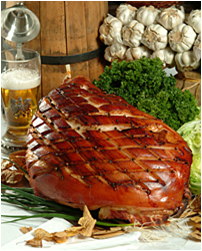
The old Polish menu could not leave out a variety of meats. On the tables were given a whole roasted pigs stuffed with buckwheat, deer and wild boar, roast with no shortage of different species of birds and fish. They used as spices: salt, garlic, horseradish and vinegar, often used to sweeten the honey. Venison played in traditional Polish cuisine a great role, and no important feast could not be without it. For the spices used in Polish cuisine to the venison are dried juniper berries and mushrooms. Favorites additives venison used in Poland are of red berries, beets and red cabbage with red wine. Classic sauces for wild venison meat (roast) is a sauce hawthorn and juniper sauce.
Of all the dishes considered typical Polish - BIGOS still occupies a place of honor. In old times in Poland without BIGOS could not have done any hunting.
Frequently on the Polish table were dishes so-called soup. Among them a special dish from pieces prepared beef or veal has gained fame, it's called TRIPE. For now enjoy the recognition BORSCHT WHITE- cream soup, due to the slightly sour, refreshing taste.
CZERNINA - this is a specific Polish soup, whose basic ingredients are chicken broth, and the blood of ducks or chickens, with fewer piglets.
For centuries, the Polish daily drink was BEER. In addition to the traditional Polish beer, mead host tables.
GROATS - a favorite dish in Old Slavonic cuisine, appeared formerly than bread. The Poles were great experts groats.
BREAD play an important role in religious ceremonies Slavic long before Christianity. Before the start new loaf were marked it with a cross. To this day we welcome and greeted with bread and salt distinguished guests at the threshold of their apartment.
PATE - in wealthy homes the that time we always have one of the cooks specialized in making pies-pate. He did pies with different meats, game, small birds, the woodcock, fieldfare, quails, partridges, grouse, ducks, capons.
T R A D I T I O N A L
C H R IS T M A S
D I S H E S
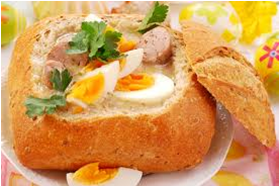
Easter, the greatest Christian holiday, turned into the old Poland one of the largest culinary festival. Lent was overture before the great feasts.
The great feast of Easter, began sharing the dedicated hard-boiled egg, combined with the wishes.
Soon after that they moved to the table. Abundance and richness "holy" was the ambition of every housewife.
What we do before Easter?
At Easter we are cleaning and we are decorating the house.
We are preparing Easter dishes and titbits.
We are baking different festive cakes for example: Mazureks or Cheesecakes.
We are painting eggs and we are decorating eggs.
Into the Holy Saturday we are going to bless foods in the nice bedecked basket.
In Triduum Paschal we are going to the church.
On Sunday Easter we are eating the festive breakfast.
On Monday Easter boys are beating girls with water.
Here are some suggestions for the Easter table with Polish dishes: Easter cake, paste called Mazureks, cheesecake , herring in Polish, soup called zur lenten, roast beef.
RECIPE
Leaven the żur
Żur acid should be prepared to advance, because in a tightly stoppered bottles in a cool place it can store up to two weeks. And doing it in the following manner. 2 cups whole meal rye flour brewed with boiling water, pouring it enough to get the batter. When cool, pour liter of lukewarm water and add whole - wheat bread crust. Then strain into a glass jar, wrapped with gauze and leave in a warm place. After three days of your sourdough is ready for use.
Lenten Żur
Boil 1 liter of broth with carrots (no cabbage) with dried mushrooms to the hot broth and add 1 / 2 cup sourdough, not strain him, because the soup should be slightly chunky. Into boiling soup, add the crushed garlic, allspice, bay leaf and 4 chopped potatoes, and when the potatoes are soft, salt to taste. You can also specify separately the potatoes, topped with broiled onion in oil.
ENJOY!
Roast Beef
Approximately 2 kg of beef haunch pour marinade.
Here's how to prepare the marinade.
Parsley, carrot and celery cut into the match, and the onion into slices. The spices add thyme, allspice, bay leaf, a few (slightly crushed) juniper berries and a glass of dry red wine.
These ingredients boil briefly and pour boiling marinade meat stacked in stoneware pot. After two days, remove the meat from the marinade and rub with salt, runs through the bacon, sprinkle a little pepper and put into a vessel called the hot fat oven-pan. When all sides are nicely browned, add the vegetables from the marinade, oven-pan we covered in the oven and roast from time to time, pour the marinade, then have their own sauce.
Already soft roast pour 3 / 4 cup thick cream carefully heaped teaspoon mixed with wheat flour. Sauce should be lightly boil.
Roast, cut into very thin slices and pour sauce through a sieve grated to be seasoned to taste.
As a legume gives the traditional beets with horseradish.
Enjoy your meal
Cake
37 dag of sugar
37 dag of corn flour
37 dag of butter plant
6 eggs
a baking powder
50 g of pure vodka (Polish vodka)
juice of half a lemon
Preparation:
First beat the eggs together with sugar on steemed.
Second mix the flour with the powder and 2 tablespoons of plain flour.
Third the crushed butter add flour, eggs, vodka and lemon juice.
Everything thoroughly until light. Put into preheated oven to 120 degrees, then set the temperature to 170 degrees and bake for 45 minutes. (hot air)
Enjoy!
Gosia’s Cheesecake
1 kg of white cheese, minced/ground
1 cube (250g) of margarine
8 eggs
¾ cup semolina + 3 tablespoons potato flour + average tablespoon baking powder
½ kg of icing sugar
1 vanilla sugar
juice of ½ lemon
Preparation:
1. Crush the margarine and sugar with eggs.
2. Add ground cheese, porridge and powder.
3. Proteins whip on a pair of on the foam and put in a bowl with the rest of the ingredients.
All gently mix.
Put on plaque dough greased and covered with porridge.
Bake at 160 degrees approximately 100 minutes.
I'm not doing, but if you like raisins, you can make it to the dough. Earlier surround them in flour.
Bon appetit!
BIGOS ala Gosia - PRZEPIS
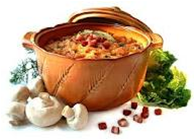
BIGOS ala Goshia – RECIPE
Ccomponents:
2.5 kg less sour sauerkraut
1.5 kg of meat (pork or shoulder)
1 kg of Silesian sausage
25 grams of dried mushrooms
large onion
Preparation
1. Boil cabbage (about 1 hour).
2. All meat and sausage (diced), fry in a pan neatly Scorching-watering or oil, at the end add the diced onion.
Throw into the pot in which we cook cabbage.
3.Add previously soaked in water, mushrooms and throw a few grains of black pepper and bay leaves.
Season with salt and pepper to taste, add a little wine and simmer another 1 hour, if necessary, watered with water, stirring occasionally.
4. Finally add the tomato paste (about 200g) or few chopped fresh tomatoes.
Pulsad el botón del traductor y las podréis realizar en casa.¡Buen provecho!
martes, 22 de noviembre de 2011
¡REGALOS DESDE POLONIA!
Hola a todos:
En Halloween los alumnos de 3º, 4º y 5º hicieros unos regalos para felicitar Halloween a nuestros amigos Escoceses y Polacos y los niños polacos nos han contestado mandándonos una postales sobre el otoño en Polonia y nos han hecho unas pulseras de regalo.En el cole nos han hecho un Power Point para que todos podais verlas.Aquí os dejo una muestra....
En Halloween los alumnos de 3º, 4º y 5º hicieros unos regalos para felicitar Halloween a nuestros amigos Escoceses y Polacos y los niños polacos nos han contestado mandándonos una postales sobre el otoño en Polonia y nos han hecho unas pulseras de regalo.En el cole nos han hecho un Power Point para que todos podais verlas.Aquí os dejo una muestra....
domingo, 20 de noviembre de 2011
"Marii Skłodowskiej Curie"
Este es el otro colegio , este de Polonia que trabajará con nosotros y Escocia en el Comenius.


Suscribirse a:
Entradas (Atom)